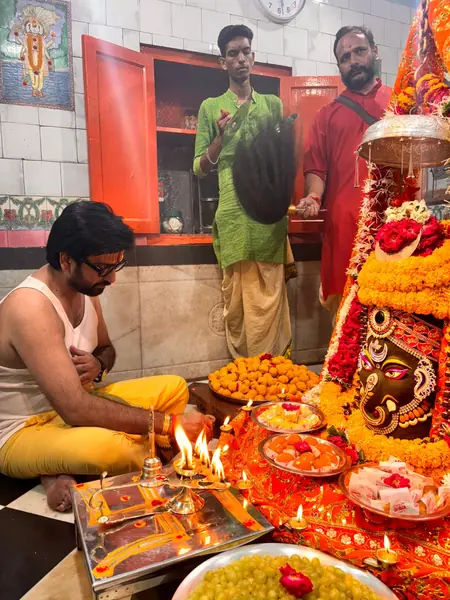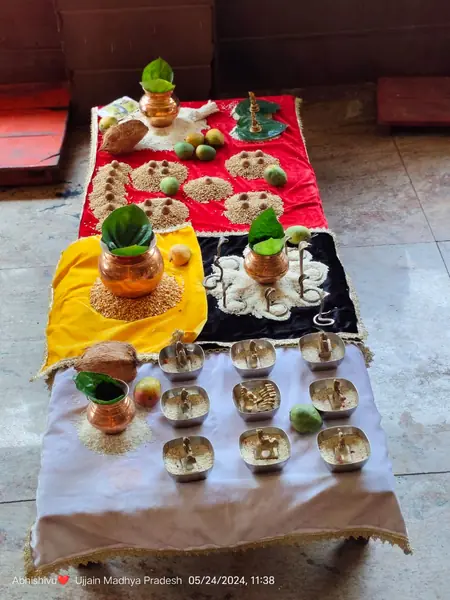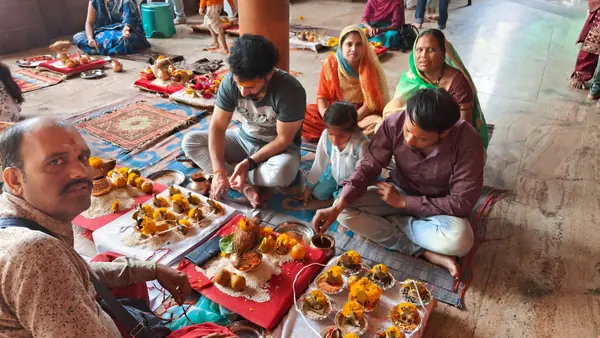
Mangal Bhaat Puja
The traditional offering of cooked rice (bhaat) on the Shivling, done at Mangalnath for Mangal-related doshas.
Read about Mangal Bhaat PujaManglik Dosh, also called Kuja Dosh, is read in a birth chart when Mangal sits in certain houses. At Mangalnath Mandir — the temple of Mangal himself — the Nivaran Puja is performed with a sankalp taken from your own kundli.
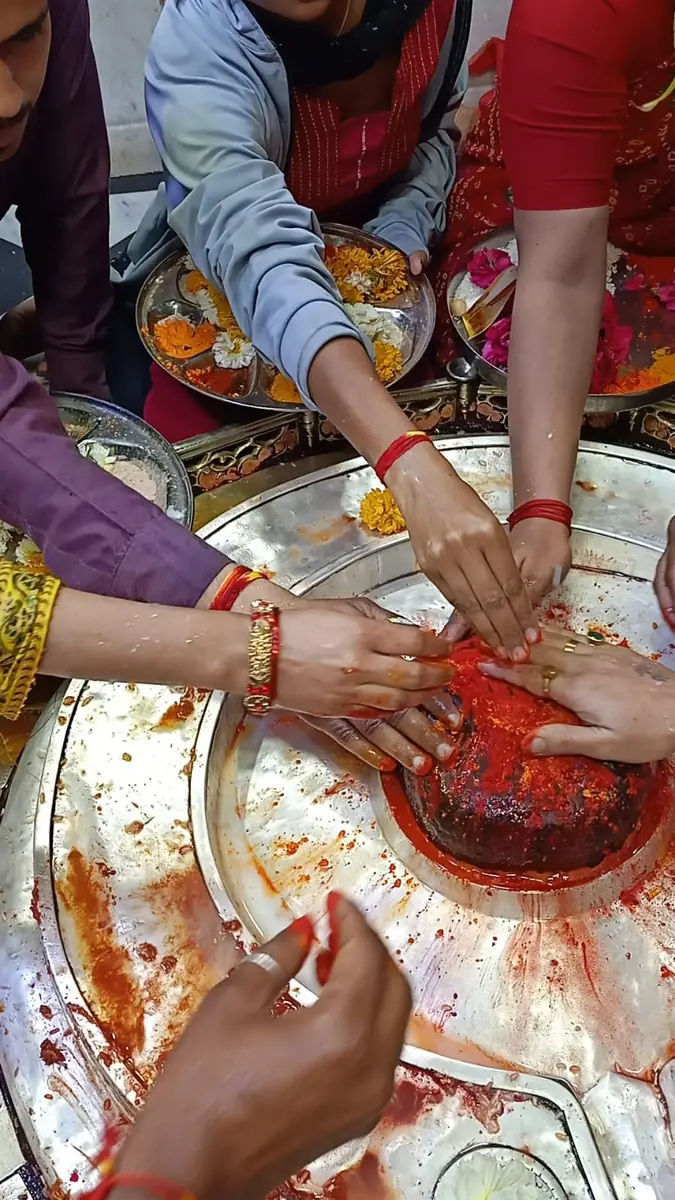
Mangal Dosh is usually read when Mars occupies the 1st, 4th, 7th, 8th or 12th house of the birth chart; some traditions also count the 2nd house. It is looked at most closely during kundli matching before marriage.
Whether the dosh applies, and how strongly, depends on the whole chart. Some placements cancel it — this is called dosh bhang — which is why the pandit reads your kundli before suggesting any puja.
Mangal stands for energy, courage and drive. The Nivaran Puja is a traditional shanti that seeks to bring that energy into balance through mantra, abhishek and havan.
A Manglik chart is common and is not a reason for fear. The puja is a shanti done with faith, not a promise of a particular outcome.
The exact order and mantras follow the vidhi for your kundli. The pandit explains the full sequence when you book.
Tell us which puja you are looking at and share your date, time and place of birth so the kundli can be read before anything is fixed.
The pandit suggests a suitable muhurat, explains the vidhi, and confirms the dakshina and samagri for your puja before you book.
Reach the temple on the day with your family. The samagri is arranged; the sankalp is taken in your name and gotra.
Each anushthan is conducted by the temple's Vedic pandits, following the temple's own parampara, with the sankalp taken in your name and gotra.

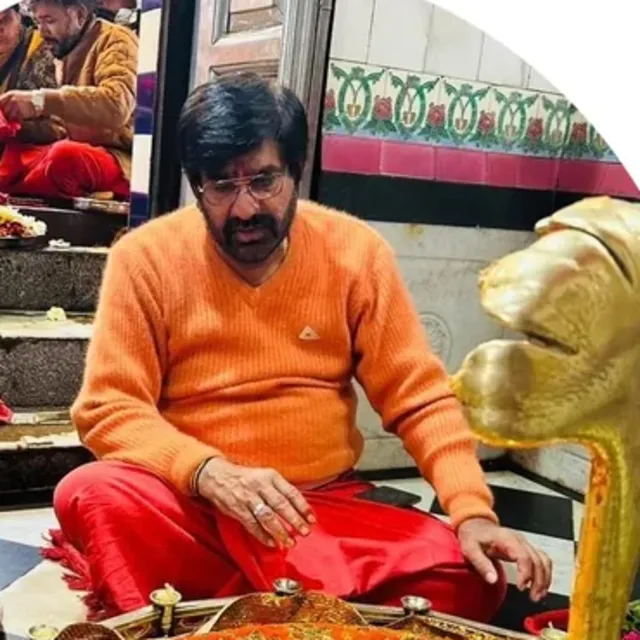
Both are done for Mangal, but they are different rituals. Bhaat Puja centres on offering cooked rice over the Shivling; Mangal Dosh Nivaran Puja is a fuller Vedic shanti with jaap and havan. After reading your chart, the pandit tells you whether one or both are suitable.
Most families book it before the wedding, usually soon after kundli matching. The pandit suggests a date that fits both the muhurat and your wedding plans.
Tuesday is Mangal’s day and many families prefer it, but the muhurat drawn from your chart matters more than the weekday. The pandit confirms the nearest suitable date on the call.
If the puja is for the couple, both usually sit together. If it is for one person before matching, that person sits with family. The pandit will advise based on your case.
The traditional offering of cooked rice (bhaat) on the Shivling, done at Mangalnath for Mangal-related doshas.
Read about Mangal Bhaat PujaFor a chart where all seven grahas sit between Rahu and Ketu — a Vedic shanti of the Naga devata.
Read about Kaal Sarp Dosh PujaOne anushthan for all nine grahas — Surya to Ketu — with their own mantras, offerings and a havan.
Read about Navgraha Shanti PujaShare your birth details on the call — the pandit will confirm the muhurat, the samagri and the dakshina before you book.